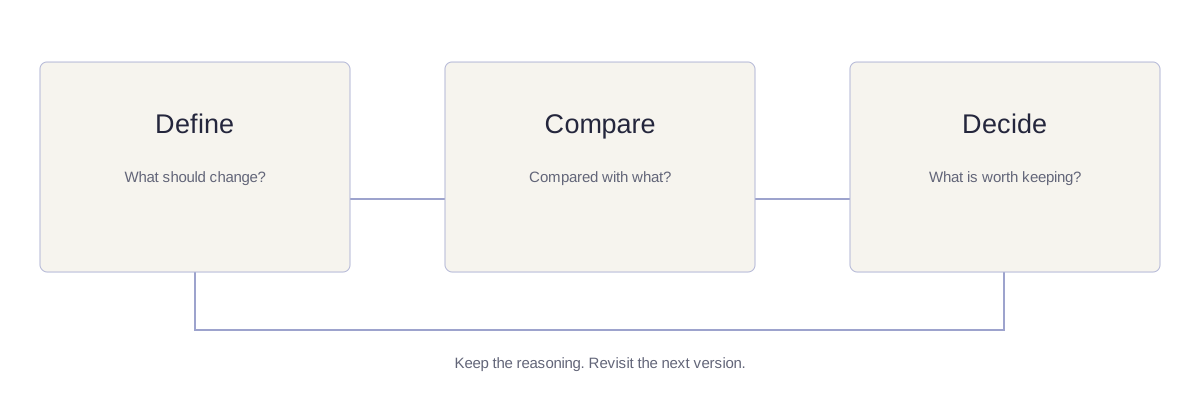
Choose the task
before the promise.
“Make work better” can mean many things. “Help this team understand where its approval process gets stuck” gives a first product a narrower job.
A personal journal might instead help someone plan the next session on a chosen project. A creative tool might keep feedback attached to the correct draft. Specificity makes it easier to explain who the product is for and what it actually does.
Keep the starting point
in the picture.
A proposed change needs something to be compared with. A review workspace could preserve the current process and the revised one, together with assumptions and unresolved questions.
It could also keep trade-offs visible. Fewer steps might leave out a necessary review. More reminders might create unwanted interruptions. A higher score on one chosen measure need not mean a better experience overall.
Keep what helps.
Revisit what does not.
A useful review could end with a decision: try a change on a defined task, revise it, or leave the current approach in place. The record should explain the choice rather than treat every new version as an improvement.
Where AI contributes a suggestion, the product brief should distinguish that suggestion from an observed result. People need to know what was proposed, what was checked and what remains uncertain.
About this perspective
This is original naming and product commentary. It describes possible future experiences, not a validated improvement method, operating software or guaranteed business or personal outcome.